UtilityKit Blog
Guides, deep dives, and explainers for developers and curious minds.

Modern password hashing has three serious contenders. We compare Argon2, bcrypt, and scrypt on memory hardness, GPU resistance, ecosystem support, and OWASP's current recommendation.

API keys are the workhorse of server-to-server authentication, but a leaked key can mean thousands of dollars in fraudulent charges. Here's how they actually work, where to store them, and how to design rotation that survives contact with reality.

HTTP caching is one of the most powerful and most misunderstood web performance tools. Getting Cache-Control right can eliminate most of your server's traffic for static assets.

CSS minification strips out whitespace, comments, and unnecessary characters without changing any rules. On large stylesheets the savings are significant, and the tooling is trivial to set up.

Web fonts are one of the most common sources of layout shift and invisible text flash. The font-display property and a few preload hints can eliminate both problems.

The critical rendering path is the sequence of steps a browser must complete before showing the first pixel. Optimizing it is one of the highest-impact things you can do for perceived performance.

A browser takes HTML, CSS, and JavaScript and turns it into pixels. The steps between those two points — parsing, layout, painting, compositing — directly affect performance and user experience.

CSS custom properties are far more powerful than SASS variables — they are live, inheritable, and can be changed with JavaScript at runtime. Here is everything you need to know to use them well.

Flexbox and Grid are not competing technologies — they solve different layout problems. Knowing which to reach for makes your CSS cleaner and your layouts more robust.

CSS specificity is the invisible rule that decides which style wins when two selectors target the same element. Understanding it lets you debug style conflicts without resorting to !important.

Aspect ratios determine how images and videos fill their containers. Getting them wrong causes layout shift and distorted media. CSS now has native solutions that make this straightforward.

Embedding images as Base64 data URIs eliminates an HTTP request but increases file size by 33% and breaks caching. Here is when the trade-off actually makes sense.

When you resize an image, your software has to invent new pixel values. The algorithm it uses determines whether the result is crisp, blurry, or filled with jagged artifacts.

Every HTTPS handshake, every code-signing check, every TLS-secured email rests on X.509. We dissect the fields, extensions, chain of trust, and what each section actually does.

Webhooks are deceptively simple — until your handler processes the same charge twice or accepts a forged event. Here's the production reality: HMAC signing, idempotency, backoff, and replay defense.

RGB and HEX are the same thing in different notations. HSL is much more intuitive for humans. CMYK lives in print. Understanding these distinctions saves you from confusing color bugs.

A free browser vocal remover does center-channel cancellation in ten lines of JavaScript. An AI tool runs a neural network trained on tens of thousands of stems. Here's why the AI sounds dramatically better, when the simple math is enough, and the honest tradeoffs between privacy, speed, and quality.

Every photo your phone takes embeds GPS coordinates, device model, lens serial number, and timestamp — all invisible but readable by anyone who downloads the file. Here is what EXIF data contains and how to remove it.

Random IDs are everywhere, but the trade-offs differ. We compare collision odds, sortability, length, and database performance for the four most common modern ID schemes.

Every fitness app guesses your calorie target the same way: BMR formula, activity multiplier, macro split. We open the black box and show what each variable actually means.

CSS sprites were the standard performance technique for reducing icon HTTP requests in the HTTP/1.1 era. With HTTP/2 and SVG, the calculus has changed — but understanding sprites is still valuable.

A PDF exported from PowerPoint can be 50MB. The same content as a compressed PDF can be under 5MB. Here is exactly what gets compressed and how the algorithms work.

When monotonic auto-increment IDs break at scale, Snowflake IDs step in. We unpack the 64-bit layout, clock-skew problems, and why every major distributed system has its own variant.

When you drag a JPEG quality slider from 100 to 80, what actually changes in the file? Understanding the compression algorithm helps you make smarter trade-offs between file size and quality.
Most PDFs are accessibility nightmares — untagged content, no reading order, images without alt text. Making a PDF accessible is not difficult once you understand what a tagged PDF actually is.

Browsers don't have a Python interpreter. So how do online Python runners work? The answer is WebAssembly and a project called Pyodide. Here's the full story.

SVG is the only image format that is also code — you can write it by hand, animate it with CSS, and scale it to any size without quality loss. Here is what every web developer should know about it.

A PDF digital signature is not a scanned image of your handwriting — it is a cryptographic proof tied to a certificate. Here is what it actually verifies and what it does not.

Every developer searches the same MDN regex page over and over. This is the reference you skim when you already know the concept and just need the syntax — including the gotchas that bite in 2026.

WebP typically achieves 25-35% smaller file sizes than JPEG at equivalent quality, and browser support is now essentially universal. The case for switching has never been stronger.

PDF and DOCX both contain text and images, but they are designed for fundamentally different purposes. Choosing the wrong format causes friction for everyone who receives the file.

Vector graphics scale infinitely; raster images don't. But not every photo belongs as SVG. Here's when tracing makes sense, when it doesn't, and the algorithms that do the work.

Choosing the wrong image format can double your page weight or break compatibility in older browsers. This guide cuts through the noise with practical guidance for each format.

A PDF looks like a printed page but is actually a complex container format with embedded fonts, compressed image streams, and a cross-reference table. Here is what is actually inside.

From the TSA 2014 manual to the Manafort 2019 filing, the most famous PDF redaction failures all happened the same way — a black rectangle drawn in a generic editor over text that was never actually removed. Here are the specific mistakes and how to verify before you ship.

Your server already compresses responses with gzip or Brotli — but do you know what those algorithms actually do? Understanding compression helps you optimize assets and set correct headers.

Why do some PDF forms work everywhere and others demand Adobe Reader? It comes down to two competing PDF form standards. Here is what each does and why one is dying.

Markdown is how developers write README files, documentation, and issue comments. Learning the full spec — including the extensions that different platforms add — takes under an hour and pays dividends forever.
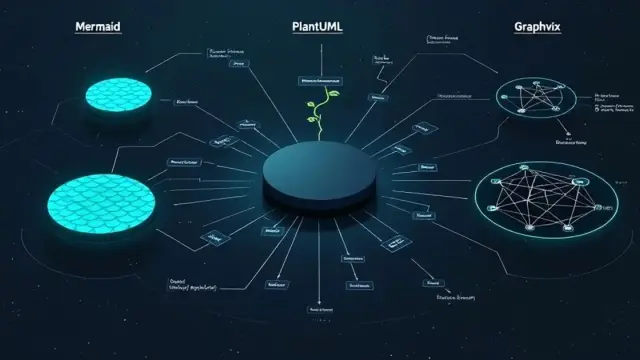
Three popular diagram-as-code tools, three different philosophies. We compare syntax, layout engines, output quality, and which one fits your README versus your architecture doc.

LCP, INP, CLS, TTFB — the alphabet soup of web performance. We explain what each metric measures, what passes the bar, and how to actually move your scores up.

JSON, YAML, and TOML each solve a different problem — but pick the wrong one and you'll spend Friday night chasing a whitespace bug. Here's the honest comparison with a decision matrix you can actually use.

INI files pre-date the internet as we know it — yet Python's configparser, Git's config, and countless system tools still use them. Here is what you need to know about this enduring format.

Generating TypeScript interfaces from a JSON sample looks like magic, but it's a careful walk through structural inference. We explain the rules these tools use and when they get it wrong.

JSON Schema gives you contract-driven validation for any JSON payload. We walk through the spec, the keywords that matter, and how it powers OpenAPI and Zod.

JSONL puts one JSON object per line, making it streamable, appendable, and easy to process without loading the entire file into memory. Here is why that trade-off matters.

TypeScript is now the default for serious JS projects, but it's not free. We weigh the cost of static typing, the value at scale, and pragmatic rules for choosing per-project.

Whisper handles 99 languages, accents, background noise, and code-switching better than anything before it. We unpack the encoder-decoder transformer architecture that made it possible.

Those six-digit codes from Google Authenticator, Authy, and 1Password are not magic. They're HMAC over a clock. Here's the precise algorithm, the security model, and why drift handling matters.

Normalization rules sound abstract until you see what a denormalized table looks like after six months of updates. This guide explains the normal forms using simple, concrete examples.
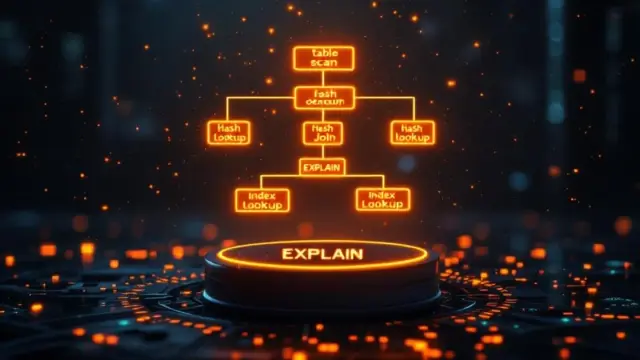
You write SQL declaratively, but the database engine decides how to execute it. We open up Postgres EXPLAIN to show how query planners actually choose strategies.

PGP (and OpenPGP) has secured email and files since 1991. We explain key pairs, the web of trust, signing vs encrypting, and where PGP still makes sense in 2026.

An index can turn a ten-second query into a millisecond query — or slow down your writes significantly if misused. Understanding the data structure behind indexes makes both outcomes predictable.

Drawing a black rectangle over text in a PDF does not redact it. We show how proper redaction strips the underlying content stream, why metadata matters, and famous cases where it went wrong.

OCR turns pixels back into text — a problem that took decades to crack. We trace the journey from template matching through Tesseract LSTMs to modern multimodal models.

An MP4 is just a wrapper. The real magic is the codec inside. We unpack containers, codecs, B-frames, and why H.264 is still everywhere despite H.265 and AV1 existing.

The choice between SQL and NoSQL is not about which is better — it is about matching the data model to your access patterns. Here is a framework for making that decision with confidence.

Why is most of your early payment going to interest? We work through the amortization formula step by step, build the schedule from scratch, and show what extra payments really do.

Old image upscaling guesses pixels with smooth math. AI upscalers like ESRGAN and Real-ESRGAN hallucinate plausible detail learned from millions of images. Here's the difference and where each fails.

SQL is one of the most valuable skills a developer can have — and the fundamentals are surprisingly approachable. Start here to write your first real queries confidently.

Most fitness watches use percent of max HR. Karvonen factors in your resting rate. We explain why that matters, what each zone actually trains, and how to set yours correctly.

Tempo detection sounds easy until you try it. From onset detection to autocorrelation and modern neural beat trackers, we walk through how computers find the pulse in a song.

Bcrypt is the password-hashing standard most modern apps still rely on. Here's how the Blowfish-based KDF works, why the cost factor matters, and how to pick a value that ages well as hardware speeds up.
TOML was designed to be obvious at a glance — a config format with explicit types and no whitespace sensitivity. Cargo.toml made it famous, but it is now used across the ecosystem.

From U-Net segmentation to modern transformer-based matting, we walk through how a single neural net can isolate a foreground subject in a photo, and why edges and hair are still the hard parts.

Three serious API paradigms, three different shapes. We compare schema definition, network footprint, tooling, and which problem each one was actually designed to solve.
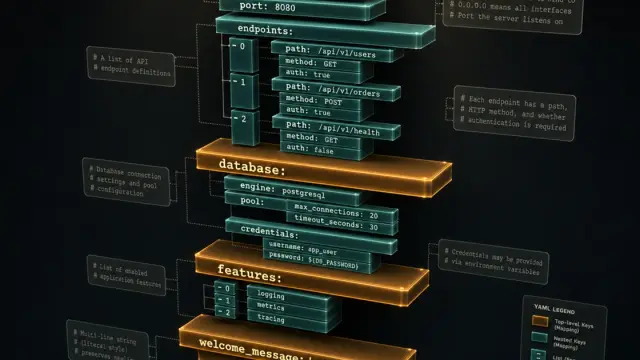
YAML is everywhere in DevOps — Docker Compose, Kubernetes, GitHub Actions, Ansible. Its indentation-sensitive syntax looks clean but has sharp edges. This guide covers the rules you need to know.

Animated GIFs are nostalgic but heavy. WebP and MP4 deliver the same motion at a fraction of the size. We compare file size, browser support, and the right tool for each job.

Changing the DPI metadata on an image does not add a single pixel — yet print shops keep asking for 300 DPI and people keep adjusting the wrong field. Here's what DPI metadata actually does, the simple math for print size, and a sizing cheatsheet for common cases.

The avalanche method always wins on math. The snowball method usually wins on follow-through. We weigh both, run the numbers on a $24,500 four-debt scenario, and explain why both methods exist.

CSV files look trivial until you encounter a value with a comma inside it, a newline in a cell, or a file saved in the wrong encoding. This post covers everything you need to handle CSV correctly.

CSP is the most powerful XSS defense most sites either don't use or deploy wrong. Here's what it actually stops, what it doesn't, and how to ship a working policy without breaking everything.

Time in the market beats timing the market — but only if you understand the math. We compare lump-sum compounding, monthly SIP, and employer-matched 401(k) contributions.

JSON took over the web API world, but XML still powers enterprise integrations, configuration files, and document formats. Here is a clear-eyed comparison to help you choose the right one.

If a Slack message that contains '10.0.0.0/16' makes you nod and quietly Google 'what does /16 mean again', this is the post for you. Read /24, /16, and /28 without the binary math.

JPEG XL was the technically strongest modern image format — until Chrome killed support in 2022. Here's the honest 2026 comparison: file sizes at equivalent quality, current browser support, and which format actually wins for which job.

Lorem ipsum is not random Latin gibberish — it is a mangled passage from a 2000-year-old philosophical treatise that a typesetter scrambled in the 1500s and designers never stopped using.

You type a domain and a page loads — but between those two events is a surprisingly elegant distributed lookup system. Here is exactly what happens at each step.

A QR code is a 2D barcode that can store a URL, contact card, or arbitrary text using a grid of black and white modules. Here is how the encoding works and why damaged QR codes still scan.

HTTP headers carry critical information about authentication, caching, content type, and security — yet many developers only interact with them when something goes wrong. This reference covers the most important ones.

A checksum is a small number computed from a block of data that lets you verify the data has not changed. Here is why this simple idea underpins file downloads, network protocols, and storage systems.

A hardcoded API key committed to a public repo is a nightmare that keeps on giving. Here is a practical guide to managing environment variables and secrets safely across environments.

Every HTTPS connection starts with a TLS handshake — a sub-second ceremony that establishes identity and agrees on encryption keys. Here is the full sequence in plain English.

Rate limiting is invisible when it works and infuriating when it is misconfigured. Understanding the underlying algorithms helps you implement limits that protect your API without frustrating legitimate users.

The magic behind HTTPS, SSH, and PGP encryption is public key cryptography — a system where you can encrypt a message that only the intended recipient can decrypt. Here is how it works.

OAuth 2.0 is the standard behind every "Sign in with Google" button — yet the underlying flow confuses many developers. This post maps out exactly what happens behind the scenes.

Unix timestamps are just numbers — the count of seconds since January 1, 1970 UTC. But timezone handling, milliseconds vs seconds, and the 2038 problem all add complexity that catches developers off guard.

REST, GraphQL, and WebSockets each solve a different category of problem. Picking the wrong one adds complexity without benefit. Here is how to think through the choice for your specific use case.

Binary is not just for low-level programming — it shows up in bitmasks, permissions, color values, and network addresses. This guide makes number base conversion intuitive rather than mechanical.

CORS errors block your frontend from talking to your own API — and the fix is not to disable it. Understanding why browsers enforce the same-origin policy makes the solution obvious.

MD5 and bcrypt are both called hashing algorithms, but they serve completely different purposes. This guide explains what makes a hash function suitable for checksums versus password storage.

Every string in your program is ultimately bytes. Understanding how Unicode maps characters to code points and how UTF-8 encodes those to bytes prevents a whole class of subtle bugs.
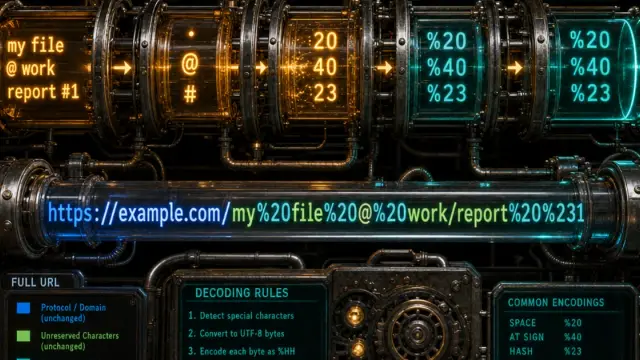
A space in a URL becomes %20, a plus sign becomes %2B — but not always, and the rules differ depending on where in a URL you are. This post explains the why and the how of percent-encoding.

Base64 shows up everywhere from JWTs to CSS data URIs to HTTP Basic Auth — but it is often misunderstood. Here is a clear explanation of what it actually does and when it makes sense to reach for it.

Treating Base64 as encryption or MD5 as a secure hash are among the most common security mistakes developers make. This post draws a clear line between encoding, encryption, and hashing.

Regex has a reputation for being cryptic, but once you understand a handful of building blocks, even complex patterns become readable. This guide takes you from zero to confidently writing your own expressions.

Math.random() and /dev/urandom look similar but are fundamentally different. One is suitable for games, one for cryptography. Understanding why that distinction matters prevents serious security mistakes.

Is that a 401 or a 403? A 404 or a 410? HTTP status codes have precise meanings that most developers only half-remember. Here is the definitive guide with practical guidance on when to use each.

A badly designed API is a source of endless frustration. These battle-tested REST API design principles help you build endpoints that are intuitive, maintainable, and future-proof.

A JWT looks like random text until you decode it — then you find a header, a payload, and a signature. This post explains exactly what each part does and why that matters for security.

JSON is the lingua franca of modern web APIs, but its deceptively simple syntax trips up beginners in subtle ways. This guide walks through every rule with practical examples.